THE FAMILY
All grasses
Britannica describes a cereal as any grass (family Poaceae) yielding starchy seeds suitable for food. The FAO counts over 10,000 species in the grass family, though few have been widely cultivated.
Where they came from doodlecereal
THE GRASSES ON YOUR PLATE
Most of the world eats a grass seed every day.
THREE CROPS 60% of food energy
60% World food energy from rice, maize and wheat
Britannica defines a cereal as any grass yielding starchy seeds suitable for food. Just three of them, rice, maize and wheat, provide 60 percent of the world's food energy intake, according to the FAO.
THE SHORT ANSWER
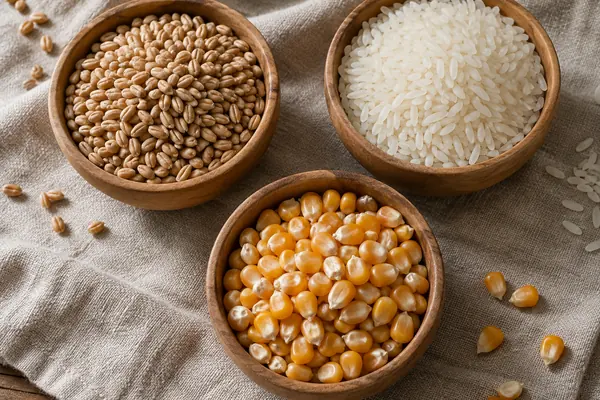
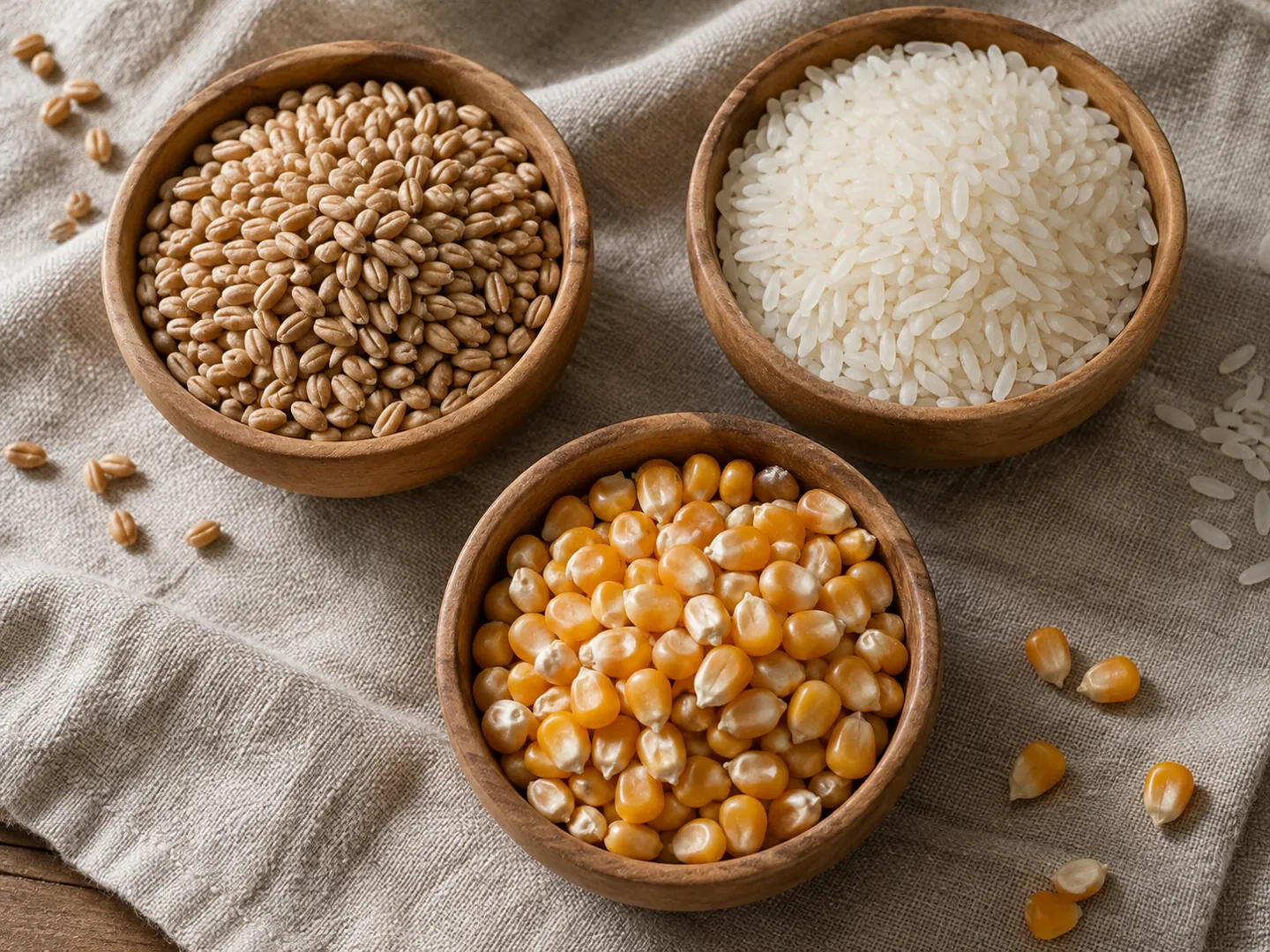
Wheat, rice, rye, oats, barley, maize and sorghum
are the cereals most commonly cultivated.
THE FAMILY
Britannica describes a cereal as any grass (family Poaceae) yielding starchy seeds suitable for food. The FAO counts over 10,000 species in the grass family, though few have been widely cultivated.
Where they came fromTHE BIG THREE
The FAO says these three are the staples of over 4,000 million people, and that rice alone feeds almost half of humanity.
See the numbersTHE KERNEL
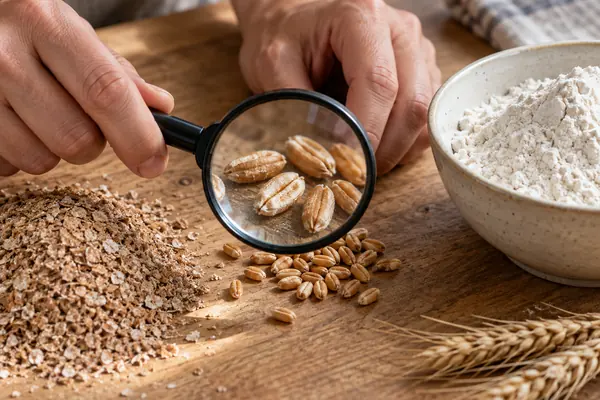
A wheat kernel is mostly endosperm, wrapped in bran, with a small germ at one end. Milling decides which parts reach the flour.
Look insideGeneral information only, not medical advice. For advice about your own health, speak to a doctor, pharmacist or other qualified health professional.
INSIDE ONE WHEAT KERNEL
Pick a part of the wheat kernel to see its share of the kernel's weight and what it contains. The bar shows how much of the kernel it makes up.
Figures from North Dakota State University's wheat quality pages. General information about grain, not dietary advice.
WHAT THE LABEL TELLS YOU
In the UK, the name on a bag of flour and the law behind it tell you which parts of the grain you are getting and what has been added back.
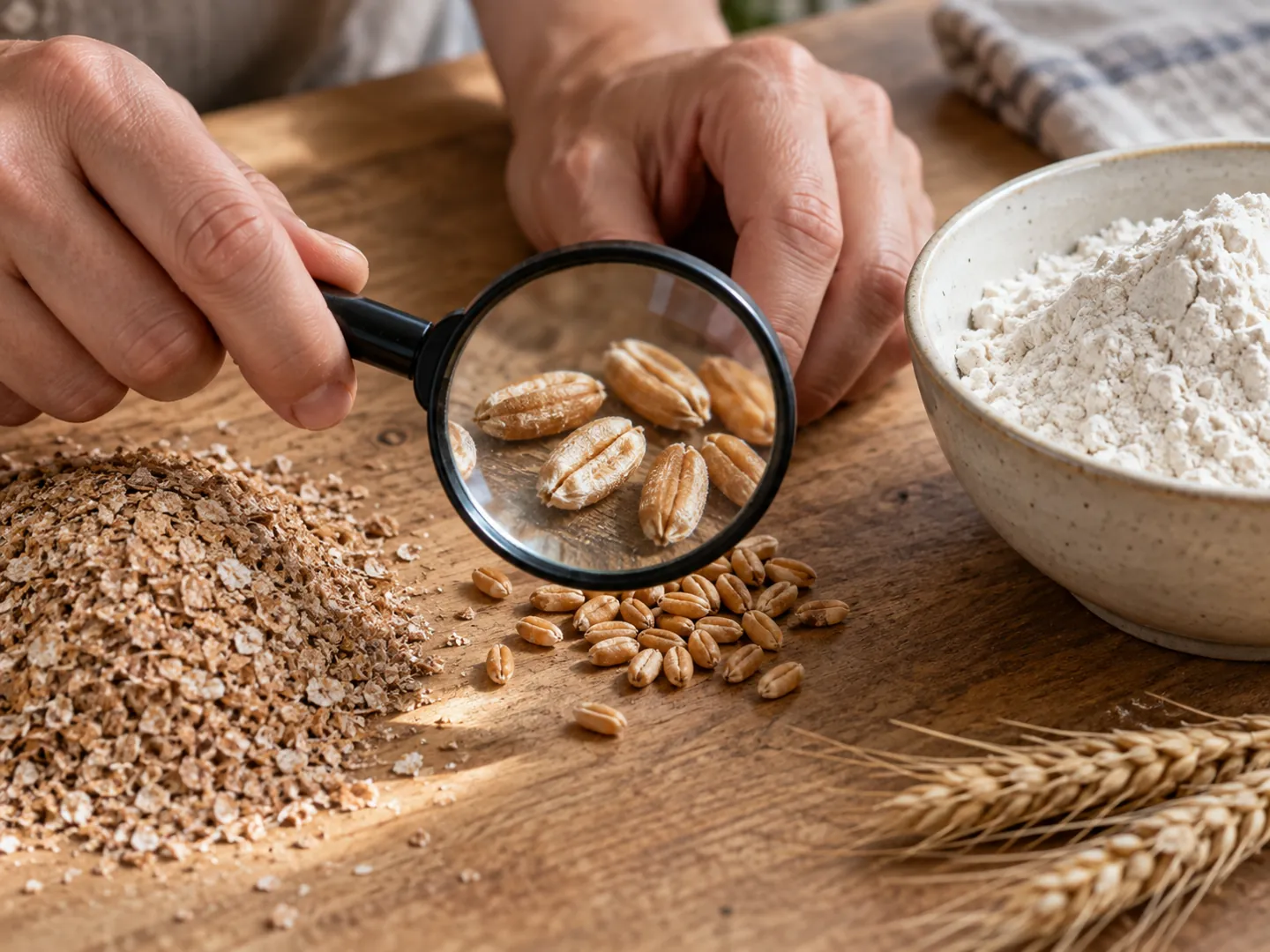
GOV.UK guidance defines wholemeal flour as flour made from the whole grain after milling or grinding cleaned cereals.
Non-wholemeal wheat flour must have iron, thiamin, niacin and calcium carbonate added. Wholemeal flour is exempt.
From that date, non-wholemeal wheat flour must also contain 0.250mg of folic acid per 100g, and the iron, niacin and calcium levels rise.
Polishing removes the bran and aleurone layer. The grain keeps longer but loses part of its nutritional value.
TWO NUMBERS WORTH KNOWING
One figure on how much we rely on cereals,
one on how much of them the world grows.
60%
World food energy from rice, maize and wheat
Of more than 50,000 edible plant species, the FAO says only a few hundred contribute significantly to food supplies. Just 15 crop plants provide 90 percent of the world's food energy intake, and three cereals provide 60 percent.
FOOD ENERGY · FAO
2,979 million tonnes
Forecast world cereal production in 2026
The FAO's October 2026 Cereal Supply and Demand Brief forecasts wheat at 813.9 million tonnes in 2026 and rice at 552.5 million tonnes (milled basis) for 2026/27.
HARVEST · FAO 2026
Diets differ by region: in the FAO's staple foods overview, cereals supply 46 percent of dietary energy in the average African diet and 26 percent in the average Western European diet.
FROM WILD GRASS TO CROP
Wild grasses drop their ripe seeds to the ground, which is called shattering. Early farmers favoured plants that kept their grain, so it could be harvested. University lecture notes describe barley as the first domesticated cereal, 7,000 to 10,000 years ago in the Fertile Crescent, and oats as the last major cereal, around 1000 BC.
Maize took a longer road. Britannica notes it was originally domesticated in the Western Hemisphere by Native Americans, and teosinte, its wild relative, shatters and has a hard case around each grain, while corn has neither.
Questions
Britannica defines a cereal as any grass (family Poaceae) yielding starchy seeds suitable for food. The most commonly cultivated are wheat, rice, rye, oats, barley, corn (maize) and sorghum.
Rice, maize and wheat. The FAO says they provide 60 percent of the world's food energy intake and are the staples of over 4,000 million people.
Bran is the outer layer, about 14 percent of a wheat kernel's weight. The germ is the embryo, about 2.5 percent. The endosperm is the starchy store, about 83 percent, according to North Dakota State University.
Yes. GOV.UK guidance says non-wholemeal wheat flour must contain added iron, thiamin, niacin and calcium carbonate, and from 13 December 2026 folic acid too. Wholemeal flour is exempt.
Not on their own. Britannica says cereals are rich in carbohydrates but comparatively low in protein, and naturally deficient in calcium and vitamin A.
Updated
ABOUT THIS NAME
doodlecereal.com is part of the DoodleSale portfolio. It isn't in an auction right now, but you can ask about leasing it.